
ICE Raids' Impact on Kids and School Safety Measures
 Emma Clarke
Following the conclusion of winter break, an elementary school in West St. Paul, Minnesota, experienced a significant absence as over 50 students failed to return to their classrooms. Liam Conejo Ramos, a young five-year-old boy from Ecuador, found himself detained by agents from Immigration and Cus
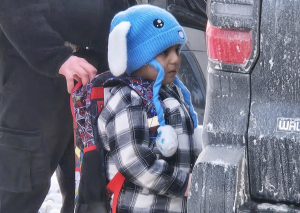
Following the conclusion of winter break, an elementary school in West St. Paul, Minnesota, experienced a significant absence as over 50 students failed to return to their classrooms.
Liam Conejo Ramos, a young five-year-old boy from Ecuador, found himself detained by agents from Immigration and Customs Enforcement (ICE) in Minneapolis as he was heading home from school alongside his father. This incident highlighted the intense operations being carried out by federal immigration authorities in the region.
During this period, federal agents executed operations reminiscent of military maneuvers across various locations, apprehending both children and their parents during school commutes. This included the detention of a five-year-old boy and a ten-year-old girl in a nearby community. Additionally, in January, ICE operations in Minnesota resulted in the tragic deaths of two protesters and injuries to numerous others.
Recognizing the urgency of the situation, Principal Libby Huettl took decisive action. Collaborating closely with the school's cultural liaison, she mobilized a team of volunteers tasked with escorting students from their apartment complexes to designated school bus stops. Additional staff members positioned themselves at these stops to provide further support. In some instances, volunteers personally transported children straight to the school premises. The primary objective was to instill a sense of security among both students and their parents, ensuring they felt confident enough to undertake the journey to school, regardless of its distance.
By the close of January, Principal Huettl observed that their concerted efforts were yielding positive results: the count of absent children at her elementary school had decreased substantially to just seven students.
“We’re dedicating considerable resources and effort toward ensuring students return to school, adapting our approach to whatever is necessary,” Huettl explained.
Patterns of Absence Nationwide
School leaders across the United States have documented comparable trends of increased student absenteeism. However, the atmosphere of fear preventing attendance is particularly pronounced in the Minneapolis region—despite successful interventions by protesters and local authorities that prompted the federal government to reduce its on-the-ground presence. As of the latest updates, officials announced that approximately 700 agents, from an initial deployment of around 3,000, would be withdrawn from the area. Nevertheless, considering the Trump administration’s established focus on border security and immigration enforcement, such operations are expected to persist in the broader context.
“This represents a profoundly challenging period for the education sector,” stated Alejandra Vázquez Baur, co-founder of the Newcomers Network, an alliance comprising educators, researchers, and advocates spanning 46 states. “Immigration enforcement has emerged as one of the foremost challenges confronting schools today.”
Both specialists and educators emphasize that immigration raids are exerting a severe negative influence on children's psychological well-being and academic progress. In response, certain school districts have instituted fresh protocols for managing ICE interactions on campus. Other systems are disseminating vital information to families regarding their legal rights. Meanwhile, some parents have executed power of attorney documents, authorizing alternative adults to assume temporary custody of their children in the event of parental detention. Principals such as Huettl are improvising real-time strategies to address immigration enforcement within their localities.
This examination delves into the consequences of ICE raids on children and outlines the countermeasures schools are implementing to safeguard students' emotional health and physical security.
Immigrant Families in Educational Settings
According to estimates from the nonprofit organization KFF, approximately one in four children—or about 19 million—in the United States have at least one parent who is an immigrant. While students from immigrant backgrounds and their families bear the brunt of federal immigration measures, schools often lack comprehensive details about their pupils' personal histories and are legally prohibited from denying enrollment based on immigration status. Some institutions indirectly gauge immigrant enrollment through assessments of English language proficiency.
Vázquez Baur points out, however, that the repercussions of immigration enforcement extend far beyond those directly affected. “It’s not solely immigrant students who are absent from classes,” she observes, drawing from her own immigrant family heritage.
She provides several illustrative scenarios: An entire cohort of students might be left without transportation if their school bus driver is detained. One child's regular babysitter, responsible for morning drop-offs and afternoon pickups, could suddenly be unavailable. Another might notice their closest companion no longer attending school.
“Your child will internalize the notion that school isn’t accessible to everyone,” she warns. “Every student will be impacted in some manner—and this was prior to the recent surge in violence.”
“The intense wave of ICE operations within our community is generating trauma, exacting a heavy burden on our children, families, staff, and residents alike.”
The experiences of children are surfacing through diverse behavioral and emotional indicators. Pastor Sergio Amezcua, who shepherds the Spanish-speaking congregation at Dios Habla Hoy church in South Minneapolis, initially supported Donald Trump in the 2024 election, swayed by assurances that any immigration initiatives would exclusively target criminals. Amezcua has since voiced opposition to federal tactics, primarily because raids have ensnared families and individuals lacking criminal histories. In a recent public radio discussion, he described ceasing to allow his four American-born children to travel to school independently; instead, he now personally drives them to and from school to evade potential encounters with federal agents.
He has observed heightened fear and hypervigilance in his children. “Occasionally, when an Amazon delivery arrives, they rush to me shouting, ‘Dad! Dad! ICE is here!’” Amezcua shared. “And I respond, ‘No, it’s just Amazon.’”
“They’re deeply traumatized,” he concluded.
Consequences for Academic Performance
The coping mechanisms adopted by families often produce unintended consequences. High school principals surveyed by researchers at the University of California, Los Angeles, reported that families remaining indoors to dodge ICE encounters frequently compromise on nutrition, leading children to eat poorly. Other students have abruptly assumed caregiving roles for younger siblings following a parent's detention.
These circumstances often hinder students' capacity to engage with school assignments. Although districts in Minneapolis and vicinity offered remote learning alternatives, experiences from the pandemic era demonstrated that virtual instruction was far from ideal for many learners. It precipitated numerous challenges, including inadequate high-speed internet access and insufficient suitable devices for educational purposes—issues that persist today.
A marked increase in absenteeism, akin to what Principal Huettl addressed, emerges as a common fallout from immigration agent deployments, affecting students irrespective of background. For example, the Charlotte-Mecklenburg Schools district in North Carolina recorded over 27,000 absences on the first school day following U.S. Border Patrol arrivals in November—nearly three times the prior week's figure and representing about one-fifth of the district's 141,000 students.
Within school environments, the federal immigration push has correlated with escalated bullying, according to high school principals interviewed by UCLA researchers.
“We’ve seen a clear rise in derogatory remarks from white students, particularly white male students, directed at Hispanic peers: ‘Show me your papers,’” recounted one principal from the nationwide survey.
“The most significant effect I’ve witnessed involves peers directing inappropriate comments at one another,” another principal informed the UCLA Institute for Democracy, Education, and Access researchers, including taunts like: “‘You’re a border jumper, your parents are border jumpers, go back to where you came from.’”
Effects on Psychological Well-Being
Additional studies, encompassing analyses of immigration enforcement impacts during the initial Trump presidency, corroborate educators' observations: heightened federal agent activity detrimentally affects youth mental health.
A research brief published last year by the Children’s Equity Project at Arizona State University referenced a study indicating that “children of immigrant origins who observed their parent or parents arrested for deportation exhibited alterations in sleep patterns, eating habits, and elevated fear and anxiety levels compared to peers who did not witness such events.”
The experts underscored that while moderate stress supports child development, prolonged or intense stress can inflict enduring physical and mental harm. This occurs through disruption of the hypothalamic-pituitary-adrenal axis, involving the hypothalamus, pituitary gland, and adrenal glands atop the kidneys, which regulate stress responses. Excessive stress in youth, as noted by ASU specialists, can compromise memory, language acquisition, learning capabilities, and heighten cardiovascular risks into adulthood.
A collaborative study from researchers at the University of Georgia and Xi’an Jiaotong University in China examined Youth Risk Behavior Surveillance System data to assess youth impacts after Trump reactivated the Secure Communities Program in his first term. This initiative shared local police fingerprints with the FBI and Department of Homeland Security for immigration database cross-checks, potentially triggering deportations.
Comparing Latino and non-Latino white students in affected areas, the analysis revealed that Latino youth, relative to white counterparts, exhibited higher incidences of persistent sadness or hopelessness, suicidal thoughts, suicide planning or attempts, substance use including alcohol and tobacco, physical altercations, and declining academic performance.
The researchers concluded that greater exposure to intensified enforcement correlated with increased feelings of sadness and hopelessness among students.
Psychological Mechanisms at Play in Children
When children or adults encounter potential threats—particularly unforeseen ones—“it triggers a cascade of innate evolutionary defenses,” explains Dr. Kerry Ressler, Harvard Medical School psychiatry professor, chief of the Division of Depression and Anxiety Disorders at McLean Hospital, and director of its Neurobiology of Fear Laboratory.
“This mirrors a classic panic attack,” he elaborates: rapid breathing, gastrointestinal distress, xerostomia, and an urge to flee. Notably, direct exposure isn’t required; Ressler cites studies demonstrating that witnessing threats vicariously activates comparable physiological responses.
Visuals of confrontations between Minnesota locals and ICE agents have permeated television and social media for weeks. Moreover, community members of all ages have observed agents patrolling neighborhoods, loitering near places of worship and bus stops, and detaining a five-year-old clad in a Spider-Man backpack and bunny ears hat.
That young boy, Liam Conejo Ramos, is among at least six students from the Columbia Heights Public School District north of Minneapolis detained by ICE since operations commenced, per district officials. (Liam was subsequently released.) Others included a ten-year-old girl en route to school, a fourth-grader heading to class, a 17-year-old seized from his home, another 17-year-old pulled from his vehicle on the way to school, and two young boys whose mother was detained without other local guardians. Two school districts and a Minnesota teachers' union have initiated legal action against the Department of Homeland Security, alleging ICE violated commitments to avoid school proximity.
“The relentless ICE presence in our community is traumatizing our children, families, staff, and neighbors, fundamentally altering our daily routines,” declared Zena Stenvik, Columbia Heights Public School District superintendent, at a January press conference. “Our students yearn to attend school for in-person instruction where they flourish and find joy.”
Instead, “fundamental childhood fears—shared by all of us—are being reignited,” Ressler notes. “Research confirms that observing others threatened vicariously stimulates personal stress systems.”
For children from economically disadvantaged or previously traumatized backgrounds—lacking reliable food, finances, or familial stability—exposure to immigration enforcement “can evoke recollections of abuse, pursuit, insecurity, or neglect,” Ressler adds, potentially compounding trauma uniquely for each child.
Strategies for Schools to Mitigate Harm
Vázquez Baur, formerly a mathematics instructor, recalls that her teacher preparation inadequately equipped her for English learners or immigrant students. She frequently served as an impromptu translator for families and received no guidance on immigration-related crises during the first Trump term.
Today, she advocates for tailored practices suited to current realities. An early second Trump administration move rescinded policies restricting immigration and border agents near schools, religious sites, and medical facilities.
Certain districts have bolstered campus protections accordingly. In Connecticut's New Haven last year, the superintendent mandated principals to manage all immigration authority interactions, requiring documentation review by legal counsel before entry.
Long-term, law enforcement involvement complicates trust dynamics, Ressler observes. “In close-knit towns where locals know police personally, officers symbolize protection rather than peril.”
Conversely, masked, unmarked agents in some areas erode this trust. (Courts have criticized certain ICE methods.) “If children perceive universal fear without protective intent, it fosters pervasive anxiety,” Ressler states.
Schools routinely drill for crises like fires, storms, and shooters. “Child psychology research consistently highlights controllability: Familiarity through drills reduces panic, much like military preparation,” Ressler explains. “This could benefit most children.”
Educators must broach officer presence apolitically, preparing students for possibilities.
“Useful phrasing for children: ‘Some officers target specific individuals but may err, causing fear of harm,’” suggests Hopewell Hodges, a therapist pursuing a doctorate in clinical and developmental psychology at the University of Minnesota. She spoke at a January webinar on aiding children amid enforcement actions.
Ressler anticipates that in heavily impacted areas, local police might later visit schools to restore community ties, distinguishing themselves from federal agents. Absent this, “it risks cultivating generational distrust of authority.”
Prompt, recurring dialogues with children are vital, Hodges emphasized. “Evidence indicates that preparation diminishes fear during adversities.”
These needn’t be singular events; like nibbling an apple incrementally, incremental discussions suffice—crucially, initiating the conversation.
“If adults avoid topics, children may deem them taboo or assume unreadiness, leading to suppression,” she noted.
Fundamentally, schools should maintain core practices. “These unprecedented times tempt extraordinary responses, but children thrive on routine care for body and mind,” Hodges advised.
Even when creating discussion forums, prioritize play, creativity, and stability via sports, arts, music, dance, and sensory activities. Promote self-regulation and cultural connections, echoing Dr. Robin Young, chief psychologist at Minneapolis's Indian Health Board, who supports elementary students.
Rather than overhauling programs, invest in staff wellness to sustain excellence in student support.
Weekly Digest
Top articles delivered to your inbox every week.