
Why Coercion Fails: Aztec Empire's Foreign Policy Lesson
 Emma Clarke
In 1520, emissaries from the Aztec empire journeyed to Tzintzuntzan, the majestic capital of the Tarascan Kingdom situated in present-day Michoacán, Mexico. They bore a grave message from their emperor, Cuauhtémoc, alerting the Tarascans to an unprecedented danger. These messengers warned of peculia
In 1520, emissaries from the Aztec empire journeyed to Tzintzuntzan, the majestic capital of the Tarascan Kingdom situated in present-day Michoacán, Mexico. They bore a grave message from their emperor, Cuauhtémoc, alerting the Tarascans to an unprecedented danger.
These messengers warned of peculiar outsiders—the invading Spaniards—who had penetrated the region and represented a severe peril to all. Seeking an urgent meeting with the Tarascan sovereign, called the Cazonci and known as King Zuanga, the emissaries arrived only to learn of his untimely demise, likely caused by the smallpox epidemic introduced by the Europeans.
Tensions between the Aztec and Tarascan realms had simmered for years, marked by hostility and conflict. Since 1476, skirmishes had erupted along their shared western border, escalating into significant battles that prompted both sides to reinforce their defenses. The Tarascans regarded the Aztecs as cunning aggressors, viewing them as an existential menace to their sovereignty and way of life.
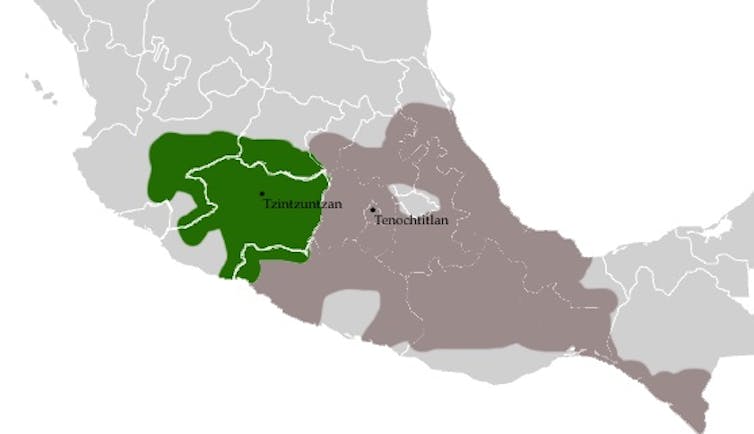
Given this backdrop of enmity, the Aztec delegation's arrival to confer with a deceased ruler sealed their grim destiny. Rather than a diplomatic reception, they were ritually sacrificed, symbolically granted an audience in the spiritual realm. This brutal act underscored the deep-seated hatred and foreshadowed the Aztecs' impending downfall, etched in sacrificial blood.
The Aztec empire's collapse stemmed not from any deficiency in military strength or resources, but from the accumulation of bitter enemies resentful of its overbearing dominance. This pivotal historical moment offers a cautionary tale for contemporary leaders, particularly as the U.S. navigates strained ties with longstanding allies under evolving foreign policy dynamics.
Distinguishing Power from Force in Statecraft
Renowned strategists like Carl von Clausewitz and other thinkers on warfare have long differentiated between power and force in the realm of international relations. Broadly defined, power encompasses ideological sway, rooted in robust military capabilities, economic vitality, and persuasive influence on the world stage. Force, however, involves the direct application of armed might to bend other states to one's political objectives.
Power can be nurtured and maintained through thriving economies, strategic partnerships, and ethical leadership that garners respect. Force, by its nature, is consumable—it depletes treasuries, exhausts personnel, and risks diminishing both domestic support and international prestige, especially when wielded with perceptions of hubris or overreach.
Established in 1428, the Aztec empire emerged as a formidable triple alliance among the city-states of Tenochtitlan, Texcoco, and Tlacopan, with Tenochtitlan asserting primacy over time. Its expansion relied on annual military expeditions to enforce submission, complemented by a complex web of power projection: ritual human sacrifices, looming threats, demanded tributes, and an ingrained ethos of ethnic supremacy.
This dual strategy of force and power was inherently coercive, sustained primarily through instilled terror rather than genuine loyalty. Conquered populations and those entangled in endless conflicts harbored profound resentment and suspicion toward Aztec rule. Consequently, the empire rested on a fragile foundation of subdued subjects and latent foes, poised to rebel at the first sign of weakness.
Hernán Cortés, the audacious Spanish conquistador who ultimately subjugated vast swaths of modern Mexico for the Spanish crown, masterfully capitalized on this widespread animosity. He cultivated alliances with Tlaxcala and other erstwhile Aztec vassals, bolstering his modest contingent of Spaniards with tens of thousands of indigenous fighters eager for vengeance.
Leading this multinational coalition, Cortés laid siege to Tenochtitlan, the Aztec heartland. Desperate for salvation, the Aztecs pinned their hopes on enlisting the aid of Mexico's other major power, the Tarascan empire to the west. Their initial diplomatic overture ended disastrously with the emissaries' execution. Undeterred, they mounted a second attempt.
In 1521, a fresh group of Aztec envoys reached Tzintzuntzan and gained an audience with the newly ascended ruler, Tangáxuan II. To underscore the peril, they presented captured Spanish artifacts: steel swords, a crossbow, and protective armor, tangible proof of the invaders' superior armaments.
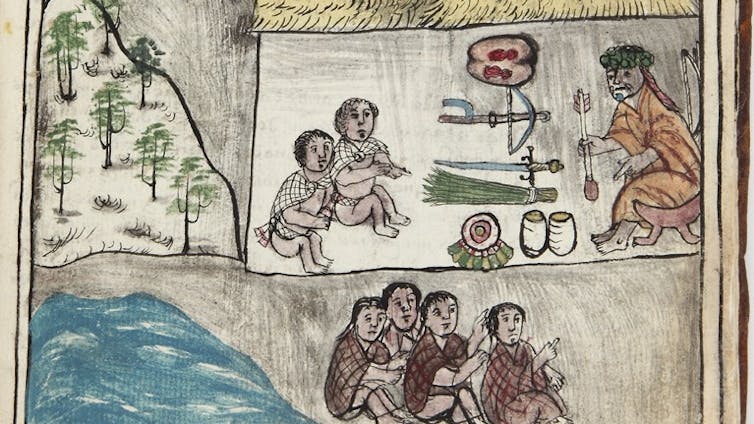
Intrigued yet wary, Tangáxuan dispatched scouts to the borderlands to verify the claims and discern any Aztec deception. En route, these explorers encountered Chichimecs, fierce semi-nomadic warriors often employed by empires for frontier security. Upon learning of the mission's purpose—to assess Tenochtitlan's plight—the Chichimecs revealed it was futile: the once-mighty city lay in ruins, a necropolis, and they themselves were heading to offer allegiance to the Tarascan court.
The following year, Tangáxuan chose submission to the Spaniards as a vassal state. Tragically, in 1530, Spanish forces executed him by fire, driven by greed for rumored hidden treasures. Had diplomatic channels remained open between Aztecs and Tarascans, the initial warning might have prompted a thorough inquiry. Imagine an alternate timeline: during Tenochtitlan's encirclement, 40,000 elite Tarascan archers pouring from the western highlands. Cortés's forces, formidable as they were, would likely have faltered against such reinforcement.
Lessons for American Foreign Policy
The Aztec downfall cannot be attributed to cowardice or tactical inferiority. In clashes with the Spaniards, Aztec warriors showcased remarkable resilience, swiftly adapting to confront cavalry charges and naval barrages equipped with cannons.
The true Achilles' heel lay in the empire's core governance philosophy: reliance on intimidation and dread, which cultivated a vast reservoir of opposition ready to exploit any vulnerability. This strategic misstep mirrors certain trajectories in U.S. foreign policy since 2025, amid shifts toward assertive posturing for economic gains, global prominence, and assertions of unparalleled national superiority.
Such approaches have involved issuing ultimatums or deploying pinpoint military actions—think tariffs as economic weapons or strikes in regions like Iran, Syria, Nigeria, and Venezuela. Yet, the potency of this coercive posture is increasingly contested. Nations including Colombia, Panama, Mexico, and Canada have demonstrated defiance, sidelining threats with minimal compliance.
Demands for territorial acquisitions, such as Greenland, now ring hollow amid waning credibility. NATO partners uphold their commitments with firm economic and defense measures, their leaders publicly rejecting pressure tactics. This dynamic risks propelling the U.S. from wielding coercive influence toward outright forceful interventions.
Should this path continue unchecked, escalating military confrontations, frayed relations with proximate powers, bolstered rival armed forces, economic upheavals, and mounting environmental crises could isolate the globe's preeminent superpower, bereft of reliable partners when most needed.
Weekly Digest
Top articles delivered to your inbox every week.